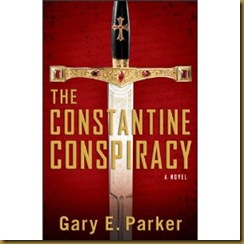
Book two along the tour of this month’s new releases from Baker Publishing Group is a suspense / thriller with a historical twist. Or at least, it was supposed to be a suspense / thriller… hrmm… *purses lips* …

The Constantine Conspiracy – Gary E. Parker

The innocent don’t run–unless their lives depend on it.

When international playboy Rick Carson stumbles onto a murder in his Montana home, he knows his life will never be the same. But he certainly doesn’t expect to be the prime suspect. And he doesn’t expect to find himself in the middle of a 1700-year-old conspiracy with tentacles reaching into the very highest levels of the government.

Park ranger Shannon Bridge is the first responding law enforcement agent on the scene. She seems legitimate, but is there more to her than meets the eye? Why is she willing to help Rick elude the law?

With unanswered questions and the law closing in, Shannon and Rick must find some way to exonerate him–and expose the truth before it’s too late. In a place where no one is who they say they are and danger lurks around every corner, can they even trust each other?

Get swept up in this thrilling tale of international intrigue, conspiracy, and the power of truth.

My Thoughts:constantine
This is a book that tries to be heavy on action but ends up weak on plot, character development, and logic.

Here’s the thing: an international conspiracy that’s been ongoing since “ancient times” is a plot that’s been done to death by now, and there are only so many ways an author can re-do this as something believable. How many people have read The DaVinci Code? You didn’t have to like it, but the book was huge and had a similar concept. In the same way, how many people are writing about boy wizards going to a school of magic right now? Unless you have something absolutely unique and fresh to offer, rehashing a recently popular plot device is a tough sell.

In The Constantine Conspiracy, rather than having an ancient society that will kill to keep a secret, we have an ancient society that’s been working to undermine Christianity since the days of Constantine. Honestly, in the end I wasn’t entirely sure how Constantine had anything to do with what happened (the connection was tenuous at best), but I can set that aside.

The problem is, having an ancient society whose aim is to eradicate Christianity from the face of the globe, starting with the United States, is a ridiculous premise to begin with. If this group was so determined, why wouldn’t it focus its efforts on other nations where there are growing segments of Christians (ie. certain African countries) before those groups became too big to deal with? And for that matter, why were they only trying to get rid of Christianity and not other religious groups?

I wonder if that question was addressed in the book and I didn’t pick it up… the explanation would have had to be short and vague, which doesn’t help the premise. There are also several occasions in the novel where the female main character, Shannon, pauses to explain things to the main character, Rick. He asks the right questions and the story stops for several pages while the READER learns information along with the character – in a very obvious, “I’m going to explain things now” kind of way. It interrupts the flow of the book, and I wonder why the information wasn’t simply given along the course of the story.

But that’s another problem I had with this book – it begins as a case of people not talking to each other, not telling each other what they need to know. It’s one of those “if these people would only just HAVE A DECENT CONVERSATION at the beginning of the book, we could avoid all this trouble” kind of situations. That frustrates me, and is a contrived way of creating conflict.

Aside from the nonsensical premise (seriously, how has no one found out about this secret society if they’ve been murdering people and manipulating the government for centuries? …surely a journalist or two would have probed into this long before) and the unfortunate plot, I also didn’t care about the characters. Honestly, the main characters could have been shot and died and I wouldn’t have cared. I know that’s harsh, but there was nothing to connect to. They were flat, uninteresting, and difficult to relate to (ie. the main character is famous, wealthy, and a “playboy”, though we don’t actually see this, we’re just told it, so there’s no real way to gauge his development over the course of the story).

In the end, I admit there must be an audience for this book out there – I’ve never read anything else by this author, but he’s written twenty novels, so someone likes his style and storytelling. And that’s great! I’m glad he’s found his niche. I, on the other hand, will not be picking up another book by the author anytime soon.

If you’re really curious, you can read an excerpt from the novel here.

About the Author 

Gary E. Parker is the author of more than twenty books. He and his family live in the Atlanta area.

Book has been provided courtesy of Baker Publishing Group and Graf-Martin Communications, Inc. Available at your favourite bookseller from Revell, a division of Baker Publishing Group.


25
Aug

Self-Editing #4: Floating Body Parts

   Posted by: Faith   in Rye Thoughts

Here’s another one of those common mistakes that we make when writing, and it’s one that I bet we ALL do and tend to have difficulty picking out after the fact.

Read these sentences:

Rachel’s eyes flew to John. If she could only take his hand and get to the kitchen, everything would be all right.

So… what’s wrong with this picture?


First, Rachel’s eyes can’t fly. Unless your character has eyeballs with little wings that tend to detach themselves from the sockets to whirl around the room, it had better be a gaze that’s flying – not the actual body part.


Second, Rachel can’t take John’s hand to the kitchen. She can hold it and lead him there, but the hand is going to be attached to the body. Unless, of course, you’re writing sci-fi or your character has some kind of detachable cybernetic implants (okay, still sci-fi).


Floating body parts occur when one character does something that, when read, literally removes or loses specific body parts. This is a very easy mistake to make when writing a first draft, and something to particularly watch out for when writing romance (all that gazing and cooing and swooning tends to get the body parts flying… er… you know what I mean).

Anyone have some funny examples to share of floating body parts from their manuscripts?

22
Aug

In My Mailbox (8)

   Posted by: Faith   in Rye Thoughts

In my mailbox is a weekly meme started by The Story Siren to showcase books you’ve received for review, bought, borrowed, or swapped. Anyone can participate, and it’s a great way to showcase new books and encourage blogger/commenter interaction!

Scroll down and let me know what you received too!

Here’s what came in my mailbox this week:

amy inspired

ARC of Amy Inspired

by Bethany Pierce


ARC of Radiance

by Alyson Noel


Galley of The Thieves of Darkness

by Richard Doetsch


unchained 

Reading Copy of Unchained

by Sharon Ashwood (won this in a giveaway!)


terrify 

Reading Copy of Terrify No More

by Gary A. Haugen with Gregg Hunter

…and a couple of textbooks for a course I’m taking this fall:

answering islam encountering


What came in your mailbox this week? :)

Colouring_pencils

Color. What does that have to do with your manuscript?  

Nothing, if you’re writing contemporary fiction.

Everything, if you’re writing historical fiction.


The issue of color was brought to my attention by none other than Kelly Mortimer of Mortimer Literary, Inc.. So, what’s the deal?

Not all color names existed at every period in history. If you’re writing a historical romance set in the Middle Ages (ie. Medieval Period; commonly designated as the 5th – 15th Centuries), and your heroine pulls a moss green gown from her wardobe, pairing it with a jade necklace that happened to be a gift from courtly visitors… well, sorry honey, but you’re writing in the wrong time period.

That’s not to say that the gown isn’t green and the necklace doesn’t have this precious stone inlaid, but the fact of the matter is your character wouldn’t think of the colors in those terms.

Language isn’t static – it’s fluid, and changes over the years. Just because you wouldn’t use the term ‘vehicle’ or have a character say ‘what’s up?’ in your Medieval fiction, doesn’t mean that every other word is fair game.

Color names are particularly important in order to realistically set the scene and establish credibility for yourself as an historical fiction writer.

How do you find out if the word you wanted to use was in use during the time period you’re writing about? Word study!

You can:

  • Google the information (make sure your source is reliable)
  • Visit a university library
  • Send an email to a university professor who specializes in the time period (honestly, they’ll probably be thrilled to answer your question, or could direct you to another reliable resource)
  • Send an email to a local history group in your community

There are plenty of ways to figure out whether ‘primrose’ was used as a color name before 1759 A.D. or not… and living in the internet age makes getting the information you need a whole lot easier than it used to be – so, no excuses!

Get your colors right, and you’ll write a better story!

Question: If you’ve written a historical… have you considered color names before? Is this something you’re actively checking on when you write?

19
Aug

August Blog Tour: ‘The Reluctant Entertainer’

   Posted by: Faith   in Tasty Tomes

I’m going to change it up today – give you all a book review to read whilst you mull over the self-editing tips :)

And… instead of doing the August Blog Tour from Revell/Bethany House and Graf-Martin Communications, Inc. all at once at the end of the month (like usual), I’ve decided to spread them out a bit over the next 2 weeks. So, let’s get to it!


The Reluctant Entertainer – Sandy Coughlin

Real Entertaining for Real People

True hospitality is not about being perfect, cooking a fancy meal, or spending a lot of money. Rather, it’s about an open door and an open heart. Popular blogger Sandy Coughlin offers a simple but savvy approach to help women break free of the anxieties that keep them from opening their homes. Emphasizing the forgotten goal of entertaining–connecting deeply with others–she shows how women can use the gifts and talents God gave them to reach out in love.

My Thoughts:   reluctant2

My first thought when I saw this book was: Did Coughlin write this book for me? Because it’s exactly what I need. Hospitality is not my gift by any means, and I’m beyond reluctant to invite people to my house. Heck, I downright refuse to do so unless absolutely necessary.

Why? It’s probably a combination of reasons. My house is too messy. My house isn’t pretty enough inside. I don’t know how to cook, or can’t cook much beyond pre-packaged meals (I have a few recipes I can make from scratch that I use often, but those have always seemed ‘not good enough’ for company). I’m also busy. And I live far away from my friends. And… excuse, excuse, excuse.

Well, Coughlin takes all those excuses, crunches them up, and tosses them aside. She explains how we don’t need to have the perfect house or the perfect food or even the perfect moment to invite people over. Friends won’t mind if you order pizza. Friends won’t care if your living room looks lived in – you know, like normal people actually live in your house, rather than creating a false, pristine environment where guests are afraid to touch anything.

She breaks down entertaining step by step, with clear explanations from her own experiences of going from reluctant entertainer to perfectionist hostess and finally coming to the realization that hospitality is about people and relationships, not about perfection or impressing others.

Coughlin also provides some VERY easy and tasty recipes (at least they sound really good) that I want to try out. Me! Wants to cook?!? Something must be off…

But I also learned that I can invite people over. The excuses are worthless – but the relationships that get built over a meal and conversation are priceless.

If you’ve been hesitant to open your home to others, this book can and will change your perspective… and your heart. Honest!

Extras

Read a Q&A with Sandy Coughlin here: The Reluctant Entertainer Q&A (PDF)

Read an excerpt from the book here: The Reluctant Entertainer Excerpt (7 pages) (PDF)

About the Author

coughlin Sandy Coughlin loves hospitality, cooking, and opening her home to others with her husband and three growing teenagers. She’s the author of The Reluctant Entertainer and co-author (with her husband Paul) ofMarried…But Not Engaged. She’s been featured on numerous media outlets including Moody’s Midday Connection, Focus on the Family, The 700 Club, and Library Journal.You can find Sandy’s blog about simple but savvy entertaining, as well as the benefits to imperfect living, at ReluctantEntertainer.com


Book has been provided courtesy of Baker Publishing Group and Graf-Martin Communications, Inc.  Available at your favourite bookseller from Bethany House, a division of Baker Publishing Group.

18
Aug

Self-Editing #2: Character Description

   Posted by: Faith   in Creating Coldcuts

Here we are at post #2 in this little series on things to look out for when self-editing. Again, this is in the copyediting stage – not editing for content or rewriting. However, these little things can often make or break your manuscript!

Today we’re looking at…

Character Description in POV

What’s wrong with this?

Jacqueline waltzed into the office, her dark brown hair swishing across the back of her blouse. She dropped her attaché onto the mahogany desk and paused, listening to the sweet sound of employees hard at work.

She glanced at her delicate gold watch. It’s not even nine and they’re already on task. I love Mondays.

Pursing her glossed lips, she pulled her cell from the attaché’s side pocket, flicked it open, and dialed.

First question to ask is: Whose point of view is this?

Second question to ask is: How can the person whose POV we’re in see themselves?Mirror, mirror, on the wall... whose POV are we in, anyway?

Obviously, they can’t – or else I wouldn’t be asking the question – but it’s surprising how often  this pops up in our own writing (mine, anyway). It’s natural for us to want to describe our main character, but it’s unnatural for someone to think “oh, I’m going to brush my long, blonde hair now”. No, you’d think “I’m going to brush my hair”, right? Same for your character.

One way writers try to get around this is the “mirror scene”. You know what that is – that’s where your character stands in front of a mirror and describes himself or herself. Unless you have a darn good reason for doing this (like I’ve said before, there are exceptions to every rule), this is cliché and you want to avoid it like the plague! (Another cliché, don’t use that either…)

Instead, bring out your character’s description through the eyes of another character. Don’t use them to list every detail at once, but bring it out slowly, and only when or if it matters.

When it comes to character description, less is more.

(Unless you’re writing a fantasy or sci-fi with created races, and then it’s a whole other ball game entirely. But I’m not getting into that right now…!)

So… have you ever written a mirror scene? Or described the character in her own POV? Don’t be shy, we’ve all done it too.

16
Aug

Beginning and Doing

   Posted by: Faith   in Creating Coldcuts

Self-editing… ah, the bane of my existence. Why do I love working on other people’s writing and cringe when it comes to my own? I have no idea. No, that’s not entirely true – maybe it’s the horrors found within my writing that I don’t want to face. Passive sentence structure! Telling! Misplaced modifiers!

To help combat my penchant for putting off edits, this week I’m going to post on some particular things to look out for when self-editing. And a note: These are copyediting things to look out for, not content… I might look at content later in the month.

Here we go…

Beginning vs. Doing

In most cases, when your character begins something, what you mean is that he’s actually doing it.

Example: “He began running toward the store.”

As soon as he starts running, he’s already doing the action. Beginning becomes doing immediately!

Change to: “He ran toward the store.”

This is more active, clearer, and keeps up the story’s pace.

Of course there will be exceptions – there are times when beginning something is the logical description – but in the majority of cases, beginning becomes doing the moment it starts.

Get out that red pen (or, uh… your track changes option) and look for all instances of:

  • starts, started, starting
  • begins, began, beginning
  • commences (*cringe*)

And with that… begin editing! Er, I mean… edit!

***

Is this a particular habit for any of you? I’ve corrected at least two instances in the last five pages of the MS I’m working on…

15
Aug

In My Mailbox (7)

   Posted by: Faith   in Tasty Tomes

In my mailbox is a weekly meme started by The Story Siren to showcase books you’ve received for review, bought, borrowed, or swapped. Anyone can participate, and it’s a great way to showcase new books and encourage blogger/commenter interaction!

Here’s what came in my mailbox this week:

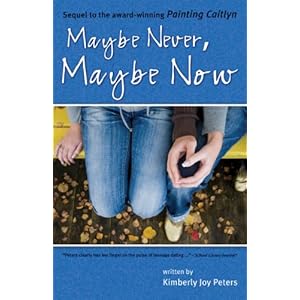
ARC of Maybe Never, Maybe NowKimberly Joy Peters (Releases October 1st, 2010)

(I won this in a Lobster Press Twitter contest! I’d link to their website but it seems to be down…)

What came in your mailbox this week? :D

13
Aug

Muse Registration Ending!

   Posted by: Faith   in Rye Thoughts

If you’re planning on attending the Muse Online Writers Conference this October (11th-17th), but haven’t registered yet, get yourself over to the website and sign up!

Earlybird (ie. FREE) registration is only open until August 15th, and after that there will be a $5.00 late fee applied to all registrations. There’s a second deadline of September 10th if you miss the first deadline, but after September 10th registration will be CLOSED until 2011’s conference.

So rather than miss out on everything that Muse has to offer, head over there right now and sign yourself up! Even if you’re not sure how many workshops/chats you can attend, it’s worthwhile to sign up and avoid the $5.00 late fee.

I had a good time at 2009’s Online Conference, and got some great feedback on a number of pieces/samples. A lot of the workshop instructors critiqued everyone’s work / gave useful feedback, which was incredibly generous of them. Talk about a great learning experience!

And if you think you might be interested in getting into e-publishing or small press publishing, there are always plenty of pitch sessions to sign up for. A number of agents usually participate as well. In fact, many of them are already listed on the website right now, so you can begin prepping your pitches and queries and avoid the typical last-minute panic!

Don’t miss out, sign up now! And if you’ve attended before, what was your favorite workshop of 2009 (or a previous year)?

12
Aug

Book Review: ‘Forget About It’

   Posted by: Faith   in Tasty Tomes

Just a quick little book review today… with the weekend coming up, I thought you might like to know about a light, breezy read that I think would be most enjoyed in the sunshine (apply sunscreen first, please), with a popsicle or ice cream cone in hand(don’t drip on the book!). Or on the beach, if you’re into that sort of thing.

Forget About It – Caprice Crane

Publisher’s Synopsis:forgetaboutitus

Jordan Landau is having a bad life. At twenty-five, she is attractive, smart, funny and talented. But all that doesn”t keep her mother from calling her fat, her boss from stealing her ideas, and her boyfriend from cheating on her. Day in and day out, she sits back and watches as everyone walks all over her.

Then one day while riding her bike home from a particularly awful day, Jordan collides with a car door and is knocked clear off her bicycle. Coming to in the hospital, Jordan realizes she has a perfect excuse for a "do-over"; she vows to fake amnesia and reinvent herself.


And it works. Finally, Jordan is able to get the credit she deserves at work, and she stands up to her family and her jerk boyfriend. She”s living the life she always dreamed of–until the unthinkable happens. Suddenly Jordan must start over for real, and figure out what really makes her happy–and how to live a truly memorable life.

My Thoughts:

Not as bad as I thought it might be! Actually, it was fairly enjoyable. Crane writes smoothly and has the ability to write distinct, interesting characters, and I found the story pretty engaging, with one complaint…

I wanted to smack the main character upside the head. Mind you, I’m pretty sure that’s the point — you spend a few chapters at the beginning wanting to knock some sense into the MC and when she finally *does* get hit in the head (and fakes amnesia) you think "oh GOOD, it’s about time". There were a few occasions when her actions under fake amnesiac pretenses didn’t seem consistent with her decisions, but all told it made for an entertaining story… and the twist, while it made me roll my eyes, provided a decent ending (though my limits of ‘suspension of disbelief’ were sorely tested).

Ultimately, I’d like to read more from Crane. I get the sense that she writes light, fun reads that make for great rainy day (or lazy weekend) entertainment.

This is a ‘buy or borrow’ type of selection (I borrowed!).