20
Feb

Book Review: “The Gospel According to LOST”

   Posted by: Faith   in Rye Thoughts

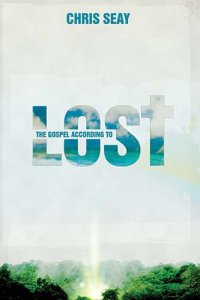
Ultimately, this book offers just what the back cover copy suggests: examples of Biblical truths using observations taken from the television show LOST. On more than one occasion, Seay takes things a bit far, but he admits on a few occasions “this may seem far-fetched, but…” and I commend him for that.

But I suppose the main fault I see with the book is its simplicity. I’m not entirely sure who the target audience is for this book – Christians? Seekers? – because the simplistic presentation of the gospel will likely bore the believer, while being too watered-down for a seeker to truly get the point of Jesus’ message.

Seay methodically looks at each main character in the TV show, drawing examples from the episodes and relating their experiences to Scripture. The main point he tends to draw out is that we’re all broken people, especially the figures on LOST, but we’re not actually lost forever. Jesus’ truth can save us, in the same way that the island seems to be the redemptive point for many of the characters on the show.

This isn’t a book for someone who’s never seen the show. In fact, if you haven’t seen the show, I’m not sure why you’d bother with this book at all, since it already assumes a level of familiarity with the characters. I appreciate what Seay is trying to do, but without a clear target, I’m afraid that the reaction he’s aiming for falls badly off course… much like Oceanic 815.

At the very least, for a believer, it might provide a good starting point for discussions with friends of all backgrounds — and I suppose that’s something.

This book was provided for review by Booksneeze.com.

18
Feb

5 Things to Do With a Shiny New Idea

   Posted by: Faith   in Creating Coldcuts

So you’re working on your latest project, just humming along… until suddenly, out of nowhere, lightning strikes.

It’s a SHINY NEW IDEA. And it’s the BEST IDEA EVER. But you have something you’re working on right now, and you need to get it done… but you don’t want this idea to disappear forever. I’d venture a guess that if it’s an idea you really love, it’ll stay with you even if you try to forget it, but if you don’t want to risk it but want to stay on track with your current project, what are you supposed to do?

First, find a blank piece or paper. Or a fresh page in your idea journal. Or a new, clean document in your Word processor. Grab a pen. And maybe a cookie (I find cookies definitely help with creativity).

Set a timer for 20-30 minutes — you don’t have a lot of time to spend on this, because you’re supposed to be working on your other project!

Now, bring that Shiny New Idea to the forefront of your brain, and start the timer.

5 Things to Write Down So That Shiny New Idea Sticks Around for Later

1. Where does this idea take place, and when?

You probably can envision something about the time or place of this new idea, so jot that down. A quick date or a location will work to bring it back to memory later. If you see something specific in your mind, like a lake or a road leading into a city, write that down. Don’t know what city it is? Then it’s not important right now, because it won’t help you recall the idea later. Write down what you see in your mind, and move on.

2. Who are your characters?

Maybe only one person came to mind. Write down who she is, what she looks like to you right now, and everything that matters about her at this very moment, according to your new idea. Don’t develop new things about her, all you want are the key points that will help you recall this particular figure. If several characters came to mind, write down what you know about them too.

Remember: You don’t want to build them right now, just write down what’s in your idea. You have another project that needs all your focus and attention, and getting caught up in new characters could take you away from the current ones. We’re using key points here.

3. What are the stakes?

This is your conflict. Your idea. The thing that makes the Shiny New Idea wonderful.

If you’re the kind of person who starts with a character and then develops a plot, no problem — here’s where you’d make a quick observation about a conflict that your character could get into. If your New Idea MC is a dragon-hunting feminist priestess from the Order of Voluminous Tomes, she might get into physical conflict (dragons), social conflict (feminism), or religious/political conflict (priestess). You probably have some sort of very basic inkling of conflict for your characters, even if you’re not 100% there yet. That’s okay. That’s why you’re just writing this down now, so you’ll be able to recall and develop things later.

If you’re the kind of person who starts with an idea and develops characters around it, this will be the easiest step for you. Write a very, very basic & bare-bones outline of the idea that came to you. Do it in point form, so you won’t be tempted to sit there and elaborate on things.

4. Pick a genre.

This is quick. Just jot it down, somewhere on your page. If you’re not certain of the genre, pick a few and write them down.

5. Walk away, and allow your brain to get back to the task at hand… your current project.

Once you’ve written the Shiny New Idea down, you should feel a sense of relief. You’ve purged the idea from your head, and your brain no longer has to hold all these details close to the front of your mind out of fear that you’ll forget something. You can focus on your current project without worry.

You’ll probably find that something amazing happens now. Even though you’ve written your S.N.I. down, your Muse still flits back to it now and again, without you even trying to think about it. Your brain takes the idea and lets it heat up — like a slow cooker — making it better and better without even trying. Connections will be made. Conflict details will arise. Characters will start whispering to you about their favorite sweater, or what they always wanted to be when they grew up, or who they have a serious thing for.

And you didn’t even have to try. Write these things down if you want to, as they come to you, but set a timer each time. Stay focused. You don’t want to be the person that flits from idea to idea and never finishes everything! Which, admittedly, I often struggle with as well. (What writer doesn’t, at some point? :) )

Now you’re free to come back to the Shiny New Idea when you’re ready for it. And, for that matter, when your current project’s characters tell you it’s alright!

12
Feb

HTRYN: Back on the Wagon

   Posted by: Faith   in Creating Coldcuts

Some of you may know, I signed up for Holly Lisle’s How To Revise Your Novel course back in November or December (can’t remember when it went live). I had every intention of revising my 2008 NaNo-Novel for the course, but when I started working on it, I just wasn’t feeling it. Needless to say, I fell behind in the course and felt pretty awful about it…

This week, with my new resolve to revise my 2007 NaNo-Novel, I’m happy to say I’m back on the revision wagon! Yesterday I managed to go through more pages in one sitting than I had in three with the other novel. Mind you, the first pass through for Lesson 1 of the course is essentially identifying problem areas, but my vision is much clearer with this novel than it was for the other one.

Yay for progress!

Have you ever found yourself stuck on a particular project, only to realize that it wasn’t the right thing for you to work on at the time?

Tags: , , ,

9
Feb

The Dread Pirate Synopsis!

   Posted by: Faith   in Creating Coldcuts

This month, I’m taking an online workshop with Camy Tang called ‘You Can Write a Synopsis!’. Now that I’ve decided to go ahead and edit my chick lit/women’s fiction manuscript, I thought it would be a good idea to start really getting serious about things like queries, synopses, and so forth, so when I saw this workshop pop up on the Black Diamond RWA chapter, I scrambled aboard at the last minute.

The first two lessons were tough — really tough — and I suspect I’ll be working on revising and changing what I submitted for quite awhile.

The first assignment was the one-line synopsis. This is what Holly Lisle calls ‘The Sentence’ (and you may have heard me talk about that before), but Camy’s instructions were a little bit different. Still, I did my best to rework the one-line summary of the story. It’s hard! It’s so difficult to put yourself on the outside of the story and pare it down to about 15-18 words.

The second part was the 5-sentence synopsis. While this wasn’t quite as difficult, it was still an enormous challenge to summarize the entire novel in just 5 sentences. You don’t have room for subplots, romantic interests (unless that’s the main point of the novel), or anything beyond the main things that set the character back from accomplishing her goal.

Wow. Talk about some serious big-picture work.

I struggled with this, and I’m really looking forward to hearing Camy’s feedback on the assignments I submitted. She’s going through everyone’s work and commenting, which has been incredibly useful — I’m enjoying reading the work of others and reading her comments, as it’s fantastic to see so many examples of the concept put into action.

Next up… the character summary paragraph. That’s tomorrow’s challenge!

How about you, have you accomplished or attempted the one-line synopsis? How about the 5-sentence elevator pitch? Do you enjoy this part of the process, or are synopses something you dread doing?

Tags: , , ,

3
Feb

Perfectionism

   Posted by: Faith   in Rye Thoughts

There’s a great post over at MFA Confidential by Kate Monahan called “We all have bad writing days, but isn’t something better than nothing?” and I encourage you to head over there and read it.

It’s about finding time to write and dealing with perfectionism & procrastination. It’s a bit convicting (I found myself nodding like a bobble-head doll while reading it), but hopefully you’ll be encouraged by it as well.

Have a read… then come on back here and tell me your favorite way to procrastinate!

1
Feb

Fire & Ice

   Posted by: Faith   in Rye Thoughts

I’ve done it — I’ve entered my first “real” writing contest. I just sent in a submission to the Chicago-North RWA Fire & Ice contest, using the first 25 pages of the NaNoWriMo novel I wrote in 2007.

No, I don’t expect to win (though it would be nice), and I don’t even expect to final (though i can hope!), but I learned something important while editing like a maniac to enter this contest.

Not only did I learn a lot about self-editing (when you can only enter the first 25 pages, you want to make sure it counts), but I learned a lot about myself and my writing.

I learned that:

  • I should have edited this manuscript a long time ago
  • I really want to KEEP editing this manuscript
  • I still believe in this story and love it, unlike last year’s NaNo novel
  • There’s a reason that this novel was the easiest and most fun to write… even though it was the first one I’d ever written… and that is…
  • I think that Women’s Fiction (ie. chick lit) is actually “my” genre. WTH??? I know. I know.

…and that was the scariest part. You’d think that my paranormal or my MG fantasy would have been the easiest, most natural thing to write, because that’s what I read the most of. That’s what I love, and that’s what I’ll pick up time and time again. But neither of my 2008 or 2009 novels flowed right… neither of them had that ‘it’ factor, that spark that drew me back to the keyboard and the characters. For some reason, I had difficulty connecting with the characters, and the story was always missing something.

Not so with Jacqueline and her quest of self-discovery. I don’t know if that’s because it was the first novel I’d ever attempted, and therefore had fewer expectations of myself (or of how to write a novel), or if it’s because that’s the only one of the three that I think really has a piece of myself in it.

Either way, I’m wondering if maybe, just maybe, “chick lit” or as they’re calling it these days, “humorous women’s fiction” is what I’m supposed to be writing right now. I have a second manuscript in this genre on the go already, and pre-planned concepts for at least 2 other novels in the genre.

So, would it really be so bad if I edited this manuscript and made this the book that I query?

I used to be worried that if I did that, I’d be tied into this genre. That somehow it wasn’t “respectable” enough, or that I wouldn’t get taken seriously, or that it would kill any chances of ever writing fantasy in the future.

Well, you know what? It’s time to stop being afraid. It’s the book I love, and it’s the story I believe in. Why be ashamed? I wrote it, and that’s that. Lots of women love women’s fiction — heck, Jane Austen was the “chick lit” author of her day! — and there’s no shame in writing it if it helps women to escape into a good book with characters they can identify with. And so what if it eventually sells and I’m locked into a contract writing these kinds of books?

I enjoy writing them, and at the end of the day, isn’t that what counts? Not some false sense of “what’s respectable” or not. That’s selling myself and many authors I love short. Who am I to say it’s not good enough for me, even though I love their work? That’s prideful and a bad attitude.

So, from today forward, I’m going to stop selling myself short. I’m going to be proud of this manuscript, fix it up, and make the best darn effort I can at submitting it to the world at large. I would be honored and blessed to someday see my Chick Lit/Women’s fiction novel alongside the likes of Marta Acosta, Kristin Billerbeck, and Meg Cabot. I respect those women and they write damn good books with real characters, THE END.

I’m proud of my work, I’m proud of the genre, and it’s time I started showing it.

I’m going to write what I feel called to write, and stop thinking in terms of what I “should” do.

Sure, I’ll continue to devour fantasy novels for my reading pleasure, but I’m also going to write what’s fun for me, what’s enjoyable, and what comes naturally.

…but enough about me. How about you? Have you ever written something you thought was “your genre” only to discover that what you loved to write fell into another category? And if so, did you have a hard time accepting it, or was it an easy transition?

29
Jan

What to Write?

   Posted by: Faith   in Rye Thoughts

When it comes to this blog, more often than not I find myself struggling with what to write.

Do people want to read writing tips? News of my own work(s) in progress? Silly and random reflections on life, the universe, & everything? More book reviews?

I have no idea, so typically I’ll let the day go by without posting anything at all. Well, that’s got to stop, because traffic has dropped off significantly since the end of last year, which means… I’m probably boring you all to death. Ack! Or, I’m just not posting enough to draw anyone’s interest. That’s fair enough, and I take full responsibility for it.

So, I’m going to make a resolution to post more regularly, even if it just means popping on to say what I’ve done to justify my existence that day. I enjoy reading updates on other writers’ blogs about their progress, as I find it helps to encourage me in my own work (or at least make me feel like I’m not alone with my struggles!), so hopefully I can give back that way.

I guess this all ties back into the question that’s been floating around for the past few weeks now: “Why do you blog?”

Well, I’m not entirely sure. I guess it’s a place to put my word vomit now and again, as gross as that sounds.

That said, here are a couple of topics I hope to comment on/post about in the near future:

  • Critique groups (I’m a new member of one, and it’s been an interesting start… good, mind you, but interesting!)
  • Querying (Something the crit group has been focusing on, and which I’ve noticed a lot of people are struggling with this month)
  • Self-Editing/Revision (I’m taking a revision course with Holly Lisle and I’m also in the midst of a self-editing workshop with Angela James, so I’d like to share some insights that I’ve learned)
  • Dealing with stress as a writer (A constant battle!)
  • Finding short story markets & submitting on deadline
  • Reading like a writer

Are there any topics you’d be interested in hearing about in the coming year? I think with this little brainstorm, I’ve come up with enough to keep me going for awhile, but if anyone comes here and has an idea or a question, I’d be happy to hear it and address it!

(…and yes, I’m still hoping for that blog layout reboot sometime in the near future. The Husband has been incredibly busy lately, so it just hasn’t happened yet… but I haven’t forgotten about it!)

Welcome to Part 2, the final stop of the Baker Publishing Group/Revell Blog Tour for January 2010 (on this blog, anyway)! Yesterday and today, I’ve featured reviews for two books (now available) that I’ve read as part of the tour. I’m providing honest reviews for these books, and would encourage you to ask any questions that come to mind – either about a review or a book itself.

And now… book 2!

50 Ways to Feel Great Today: Keys to Beating Stress, Worry, and the BluesDavid B. Biebel (D.Min), James E. Dill (MD) & Bobbie Dill (RN) (Revell, 2009)

Synopsis:

Feeling awful, stressed, or paralyzed by worry? This book contains 50 suggestions to help you break out of that funk and start feeling better today. These ideas are simple, low or no cost, and are backed by scientific and medical advice and anecdotes, based on the authors’ collective experience in each field.

Thoughts:

First, the good:

The book contained 50 simple, easy-to-accomplish, low or no cost ideas for getting yourself out of a difficult psychological state and back into enjoying life. Simplicity really is the name of the game in the book — for example, some of the ideas are “lift weights” or “go fly a kite”.

For someone who doesn’t normally do much more than go to work, come home to eat & watch TV, then go to bed and repeat the next day, some of these ideas might challenge & encourage that individual to break out of such a monotonous routine (which is likely the cause of ‘the blues’ or stress in the first place).

Now, the not-so-great:

Wow. “Go to the Y”? “Pamper Yourself”? “Work on Your Scrapbook”? “Go fishing”?

Do you see the problem here? While there are 50 simple suggestions in this book, the issue is that the book itself doesn’t seem to know what it wants to be. The suggestions target men, women, younger individuals, older individuals… but not together. It feels as though each chapter is targeted at a different group, making it very difficult to really glean a sense of coherency in the list of suggestions.

Because of this, I found the book to be too simplistic. I’d go so far as to say “complete and utter tripe”, at least for someone with half a brain. Anyone with a lick of common sense would know that having a massage is a great way to beat stress, so does anyone really need a book to suggest it alongside “use the internet creatively”?

Admittedly, there were a few good suggestions scattered amongst the ridiculous ones, but on the whole, I didn’t take away anything of value. And before you accuse me of not being in the target market for the book, let me assure you that I struggle with stress, anxiety, drastic mood swings bordering on depression, and high tension on a daily basis. Based on my own medical history and daily life, I’m 99.9% certain I’m the target market, and I found nothing in this book but frustration, sighs, and annoyance.

My apologies to the authors, but I think the book would have been much more successful if they’d decided on a target group first (ie. men or women), and then wrote the book directed to them — or, even better, broke the book up into two separate books, one targeted at women and another at men. That way, all the suggestions might be applicable/realistic to each particular group who read the book. Because let me tell you… I have my serious doubts that men are going to appreciate the suggestion to “work on your scrapbook” to help beat stress.

I’m just saying.

Available now from your favorite bookseller from Revell,

a division of Baker Publishing Group.

Welcome to Part 1 of the Baker Publishing Group/Revell Blog Tour for January 2010! Today and tomorrow, I’ll feature reviews for two books (now available) that I’ve read as part of the tour. I’ll be providing honest reviews to these books, and please feel free to ask any questions that come to mind – either about the review or each book itself.

So, without further ado, here’s book one!

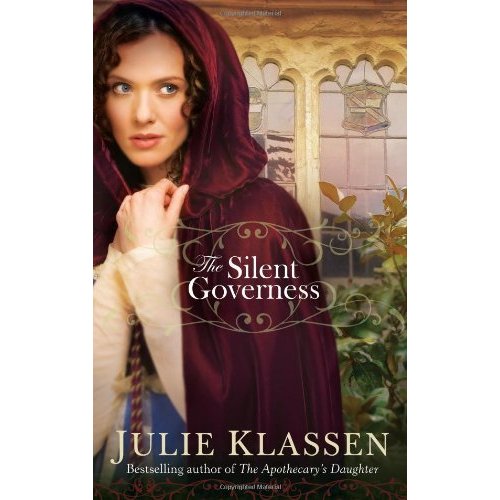
The Silent Governess – Julie Klassen (Bethany House, 2009)

Synopsis:

Olivia Keene is running away from her own secrets, but when she accidentally overhears a dangerous secret belonging to the Lord Bradley, she has little choice but to accept a post at his father’s court — a place where Lord Bradley can ensure Olivia’s silence about his own secret.

As Miss. Keene teaches the children at Brightwell Court, Lord Bradley finds himself both drawn to her and frustrated by her. What is the secret she hides, and why does his heart feel so conflicted?

Thoughts:

At first glance, The Silent Governess is an intriguing tale of relationships in nineteenth-century England: familiar characters, social mores, elegant costuming, and people who never quite say what they mean. It’s fairly typical of this style of historical fiction, and fans of Julie Klassen’s previous work will find much to appreciate here.

The characters are well-drawn, and sub-plots arise at every turn — and not only that, but Klassen manages to weave them all together at the end with skill, leading to a relatively satisfying conclusion. However…

My primary issue with the book was the amount of crying/weeping/tears from the main character throughout the first half of the novel. Every ten pages or so, Miss. Keene either cries, holds back tears, or feels teardrops rolling down her cheeks. Yes, admittedly, she goes through quite a bit at the beginning of the book, but do we really need to join her at every moment of her tears? It gets rather tedious, and at one point I actually shouted at the novel, “Listen, just suck it up and deal with it!

At the end of the book, the resolution with Miss. Keene’s father also seemed somewhat contrived. It felt as through Klassen was desperate to tie up all the threads into a neat little bow, and that subplot in particular was resolved far too conveniently and neatly to be believable. It’s eye-roll worthy, to say the least.

That aside, the book held my interest at length — I read the entire thing in one evening. I suspect that, despite its flaws, people who are a fan of this genre and of Klassen’s work will enjoy The Silent Governess. On the whole, I much preferred Klassen’sLady of Milkweed Manor — but, it’s worth giving this one a try.

I’d also recommend it for church libraries, as I think it would find quite a large readership there.

Available now at your favorite bookseller from Bethany House,

a division of Baker Publishing Group.

You have from now until Feb. 7th, 2010 to get your entry in for the Amazon Breakthrough Novel Contest!

Admittedly, I forgot about this contest and so I don’t think I have enough time to get anything in for it (all my manuscripts need serious work before they’re ready for submission), but if you have something that’s ready to go… why not?

The prize they’re offering is publication with Penguin books, plus a $15,000 advance. Not too shabby for a first-time author!

I haven’t read all the material on the website about the contest, so I can’t say for sure whether there’s any ‘fine print’ to be aware of. All I know is that it sure sounds like a fantastic opportunity to get your work out there and directly in front of the eyes of editors from a highly respected publisher.

If you’ve entered this contest before, what was your experience like? If you haven’t entered, what’s keeping you from submitting something this time around?